UK licensed medication

Next day delivery

Discreet packaging

Free expert advice & support

Ubayd Ali

Authored by

Ubayd Ali

Superintendent Pharmacist

Registration Number: 2219322

NHS Pharmacist and founding member of HEBA, with years of experience in healthcare across innovative organisations.

Sufyan Tahir

Reviewed by

Sufyan Tahir

Clinical Governance Lead

Registration Number: 2221275

Review Date 19 March 2026
Next Review 19 March 2028
Published on 19 March 2026
Last Update 19 March 2026

Treatment Details

Desogestrel is classified as a progestogen-only pill (POP), commonly referred to as the mini-pill. It contains the synthetic hormone desogestrel, which prevents ovulation in the female body to avoid pregnancy.


Administered as 75mcg tablets taken daily without interruption, Desogestrel maintains contraceptive effectiveness even when taken up to 12 hours late. This flexibility makes it an excellent choice for women who experience adverse reactions to oestrogen-containing products or those who are currently breastfeeding.

How does Desogestrel work?

Desogestrel functions as a synthetic version of progesterone, a natural female sex hormone. As a modern formulation of the progestogen-only pill, it operates through multiple protective mechanisms.
Like traditional POPs, Desogestrel thickens cervical mucus, creating a barrier that prevents sperm from traveling through the uterus to reach and fertilize an egg. Additionally, this newer generation POP inhibits egg maturation, effectively preventing ovulation in most women since the ovary cannot release an undeveloped egg.


Overview

 Desogestrel Overview


Type of Medicine Progesterone-Only Contraceptive Pill
Works By Prevents ovulation and thickens cervical mucus
Active Ingredient Desogestrel
Effective Within Up to 7 days
Pack Size 84 tablets
Strength 75 micrograms
Used For Contraception
Generic Yes
Use With Alcohol No known issues
More Information Patient Information Leaflet, NHS

Side Effects

Potential Adverse Reactions
Like all medications, Desogestrel may cause side effects in some users. Not everyone taking this progestogen-only pill will experience adverse reactions. In fact, low-dose oral contraceptive POPs such as Desogestrel often produce fewer and milder symptoms compared to other hormonal birth control methods like combined pills. Progestogen-only pills are frequently prescribed to individuals who have experienced unpleasant side effects from combined oral contraceptives, such as severe mood disturbances or depression. Should you experience adverse effects from Desogestrel, they typically diminish after the initial few months of treatment. Commonly reported side effects include:

  • Menstrual cycle alterations, including irregular periods, spotting (breakthrough bleeding), or absence of periods
  • Mood changes (including low mood)
  • Reduced libido
  • Headaches
  • Nausea
  • Acne
  • Breast tenderness and pain
  • Weight increase.

If side effects concern you or persist beyond the first few months (or after discontinuing Desogestrel), consult a doctor, pharmacist, or nurse for guidance. Severe side effects or allergic reactions require immediate medical attention from a doctor or your nearest emergency department. Before starting Desogestrel tablets, thoroughly review all side effects listed in the Patient Information Leaflet.

Directions

How to take Desogestrel

Before beginning treatment, ensure you have read and understood the administration instructions detailed in the Patient Information Leaflet.
Desogestrel is for oral use only to prevent pregnancy. It can be prescribed online by our medical team for women over 18 years who currently receive it from their GP.
Daily Administration:
Take one Desogestrel tablet daily at the same time with water until the packet is empty. Start each new packet on the top row, taking the tablet that corresponds to the correct day of the week printed above each tablet. When you finish a pack, begin a new pack the next day at the same time without taking a break between packs.

Starting Desogestrel

If not currently using hormonal contraception (or none used in the past month):

  • Wait for your period to begin and take your first tablet on day one of your period
  • No additional contraceptives needed
  • If starting after day 1 of your period, use barrier contraception (condoms) for 7 days When switching from a combined pill, vaginal ring, or transdermal patch:
  • Take the first Desogestrel tablet on the first day after your tablet, ring, or patch-free break of your current contraceptive, and use additional barrier contraception (condoms) for 7 days OR
  • Skip the tablet, ring, or patch-free break and start Desogestrel the day after your last tablet, or on the day you remove your ring or patch. No additional barrier contraception needed When changing from another progestogen-only pill:
  • Switch on any day without needing additional barrier contraception When changing from an injection, implant, or hormonal IUS (coil):
  • Start Desogestrel when your next injection is due, or on the day your implant or IUS is removed. No additional barrier contraception needed After having a baby:
    Start Desogestrel between days 21 and 28 after birth without needing additional barrier contraception
  • If starting after day 28, use additional barrier contraception (condoms) for the first 7 days

Missed Pill Protocol

Missing a Desogestrel pill may compromise your protection, potentially requiring additional contraceptive methods. If more than 12 hours late, or vomiting/diarrhea occurs within 3-4 hours (counts as missed pill):

  • Take the missed pill immediately upon remembering or when feeling better, then continue at your usual time (may need to take two pills on the same day)
  • You may not be fully protected; use barrier contraception (condoms) for 7 days
  • If more than 12 hours late and you've had sex, consider emergency contraception If less than 12 hours late:
  • Take the missed pill as soon as remembered and take the next tablet at the usual time
  • You remain protected from pregnancy If uncertain, consult your doctor or pharmacist for advice.

More Information

Verified customer reviews

Frequently asked questions

  • What is Desogestrel and how does it work?

    Desogestrel is a progesterone-only pill (POP) containing 75 micrograms of the synthetic hormone desogestrel. It works in two ways: by preventing ovulation (stopping the egg from ripening and being released) and by thickening the cervical mucus, making it harder for sperm to reach and fertilise an egg.

  • Who is Desogestrel suitable for?

    Desogestrel is suitable for women who cannot take contraceptives containing oestrogen, including those who are breastfeeding, have sensitivities to oestrogen-based products, or have experienced unpleasant side effects from combined oral contraceptives such as severe mood swings or depression.

  • How effective is Desogestrel?

    When taken correctly, Desogestrel is a highly effective contraceptive. It can be taken up to 12 hours late and still remain effective, giving you more flexibility than traditional progesterone-only pills.

  • How do I take Desogestrel?

    Take one tablet every day at the same time with water, without any breaks between packs. Start each new pack the day after finishing the previous one. Take the tablets in order following the day of the week printed on the pack.

  • When should I start taking Desogestrel?

    If you're not currently using hormonal contraception, start on the first day of your period for immediate protection. If starting later in your cycle, use additional barrier contraception (such as condoms) for the first 7 days. Different guidelines apply if you're switching from other contraceptive methods.

  • What should I do if I miss a pill?

    If you're less than 12 hours late: Take the missed pill immediately and take your next pill at the usual time. You'll still be protected.
    If you're more than 12 hours late: Take the missed pill as soon as you remember, continue with your next pill at the usual time (you may take two in one day), and use additional barrier contraception for 7 days. If you've had sex, consider emergency contraception.

  • What are the common side effects?

    Common side effects include changes to your menstrual cycle (irregular periods, spotting, or no periods), mood changes, decreased libido, headaches, nausea, acne, breast tenderness, and weight increase. These side effects typically improve after the first few months of use.

Related treatments

Why go with HEBA?

Why Heba Slide Image

UK-based clinical team

Our specialist clinical team ensure your safety and health. Every treatment is carefully reviewed with treatment provided based on your overall health.
Why Heba Slide Image

Clinically proven treatments, safely prescribed

We are a GPhC registered pharmacy, dispensing medication from MHRA approved facilities. You can rest assured that your medication will always be 100% genuine and authentic.

Why Heba Slide Image

Long term support

We are committed to providing assistance and guidance for your well-being and health, with a focus on long-term health outcomes and holistic support to ensure that you are getting the most from your treatment.
Why Heba Slide Image

Treatment plans personalised to you

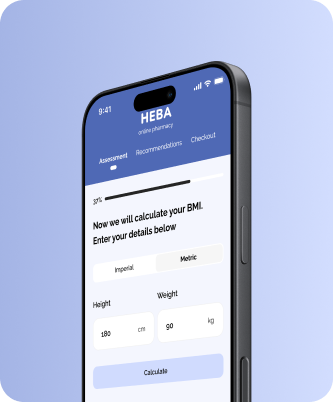
We customise your treatment plan to fit your needs and health profile.

Your goals are within reach with HEBA

Get started on your health and wellness journey today

Explore all treatments